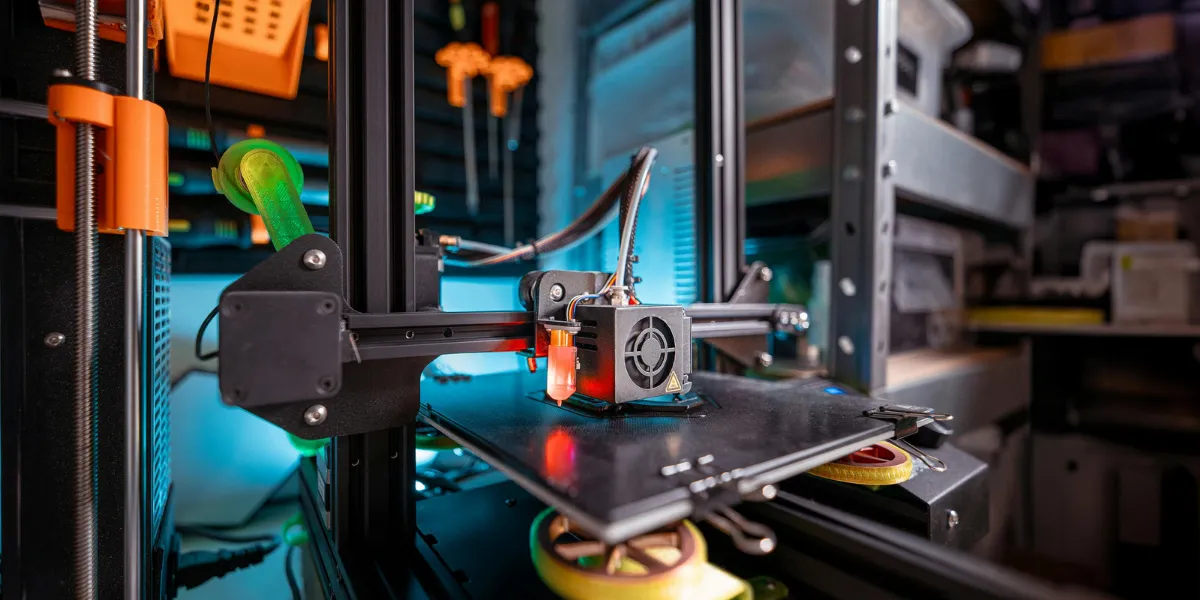
A 3D printer sitting on a desk is just a machine. A well-planned 3D printing business, however, can turn that machine into a service that solves real problems for customers. Across Canada, entrepreneurs can use 3D printing to produce prototypes, replacement parts, customized products, architectural models, promotional items, hobby components, and small production runs without the infrastructure traditionally associated with manufacturing. The technology has also become more accessible, allowing smaller operators to start from a home workshop and expand as demand grows. But buying a printer and listing products online does not automatically create a profitable business. Success depends on choosing the right market, controlling material and operating costs, producing consistent quality, pricing jobs correctly, and finding customers who value what you can make. If you are considering starting a 3D printing operation in Canada, this guide explains how to build the business from the ground up, what equipment you may need, how to calculate pricing, where to find customers, and how to scale without wasting money.
What Is a 3D Printing Business?
A 3D printing business provides products or services using additive manufacturing technology. Instead of cutting material away from a larger block, 3D printing builds an object layer by layer from a digital design.
The business model can take several forms. Some entrepreneurs sell ready-made products through online marketplaces or their own websites. Others operate as print-on-demand services, producing parts based on customer-provided files. More advanced businesses offer design, prototyping, engineering, or small-batch manufacturing services.
A typical 3D printing business might serve:
- Product designers
- Engineers
- Students
- Hobbyists
- Small manufacturers
- Architects
- Automotive enthusiasts
- Game and miniature communities
- Homeowners needing replacement components
- Businesses requiring customized products
The important distinction is that customers are not really paying for “plastic.” They are paying for a solution.
A customer may pay $40 for a replacement component because finding the original part is difficult. A startup may pay $200 for several prototypes because speed matters more than the raw material cost. An engineer may pay for a functional prototype that helps test a product before investing in expensive manufacturing.
That means profitability depends heavily on the problem you solve, not simply the printer you own.
Why Start a 3D Printing Business in Canada?
Canada offers opportunities for small manufacturing and customized production businesses because many customers need specialized items that are expensive, slow, or impractical to source through conventional manufacturing.
One advantage of 3D printing is relatively low initial production infrastructure. A small operator can begin with limited equipment, validate demand, and add capacity as orders increase. This is very different from traditional manufacturing models that may require molds, tooling, large production facilities, or substantial minimum order quantities.
Canadian entrepreneurs can potentially target both local and national customers. Local customers may value fast turnaround and pickup, while online customers can provide access to a much larger market.
Potential opportunities include:
- Custom household products
- Replacement parts
- Business prototypes
- Product development
- Architectural models
- Custom organizers
- Educational models
- Industrial components
- Hobby accessories
- Personalized gifts
- Small-batch manufacturing
- Design and CAD services
However, competition also exists. Cheap consumer printers have made basic printing accessible to almost everyone. That means simply advertising yourself as someone who “owns a 3D printer” is not a strong competitive advantage.
Your advantage should come from quality, specialization, speed, design capability, reliability, customer service, or expertise in a particular niche.
Choosing the Right 3D Printing Niche
Choosing a niche is one of the most important decisions you will make. A general-purpose 3D printing service can accept many types of orders, but being too general makes marketing difficult. Customers need a clear reason to choose you instead of another provider.
Start by identifying customers with a recurring problem that 3D printing can solve efficiently.
For example, instead of marketing yourself as “3D printing services,” you might specialize in:
- Automotive replacement and accessory components
- Custom brackets and mounts
- Architectural models
- Engineering prototypes
- Board-game accessories
- Cosplay components
- Custom business signage
- Personalized home organization products
- Industrial prototypes
- Small-batch product manufacturing
Researching Your Target Market
Market research does not need to be complicated. Start by identifying who already pays for similar products or services.
Search online marketplaces, local business directories, social media communities, and competitor websites. Look for products with consistent demand and examine what customers complain about.
Questions worth investigating include:
- Are existing products difficult to find?
- Are shipping times long?
- Are products poorly designed?
- Are customers asking for customization?
- Is the current pricing high?
- Do businesses need low-volume production?
- Can you provide faster local delivery?
- Can you improve durability or appearance?
Do not choose a niche simply because you personally like it. Personal interest is useful, but demand determines whether the business survives.
A good niche has customers who have a reason to spend money and a problem you can solve better than alternatives.
What Equipment Do You Need?
The equipment required depends on the type of 3D printing you plan to offer. You do not necessarily need an expensive industrial printer when starting a small operation.
A basic setup might include:
- One or more 3D printers
- Filament or resin
- Build plates
- Nozzles
- Replacement parts
- Calibration tools
- Digital calipers
- Cleaning supplies
- Storage containers
- Computer
- Design or slicing software
- Ventilation equipment where appropriate
- Packaging materials
Your printer choice should be based on the products you intend to manufacture.
FDM printing is commonly suitable for functional parts, prototypes, household components, and many general-purpose applications. It works by melting filament and depositing it layer by layer.
Resin printing can provide much finer detail and may be suitable for miniatures, detailed models, jewelry-related applications, and other products where surface detail is important. However, resin workflows involve additional handling, cleaning, curing, and safety considerations.
Don’t Buy Too Much Equipment Too Early
A common beginner mistake is purchasing several printers before establishing demand. More machines do not fix a weak business model.
Start with enough capacity to test your market. Once you consistently receive more orders than your equipment can handle, expansion becomes easier to justify.
Track:
- Printer utilization
- Failed print rate
- Average print time
- Material consumption
- Maintenance requirements
- Revenue per machine
- Profit per job
This data tells you whether adding another printer is actually worthwhile.
Understanding 3D Printing Costs
A profitable 3D printing business needs accurate cost calculations. Many beginners calculate the amount of filament used and then add a small markup. That approach can dramatically underestimate the true cost of production.
Your actual cost can include:
- Filament or resin
- Electricity
- Printer depreciation
- Maintenance
- Replacement parts
- Failed prints
- Labour
- Design time
- Post-processing
- Packaging
- Shipping
- Software
- Website costs
- Payment processing
- Marketing
- Rent or workspace costs
Suppose a printed object uses $3 of material but takes four hours to print. The material cost is only one part of the economics. The machine is occupied for four hours, electricity is consumed, and there is a risk that the print fails.
If you designed the object yourself, your design time also has value.
A simple cost formula can be:
Total Job Cost = Material + Machine Time + Labour + Post-Processing + Packaging + Other Overhead
Then add a profit margin appropriate to the product and market.
The exact margin will depend on your niche and value proposition. A customized engineering prototype can support a very different price than a basic decorative item.
How to Price 3D Printing Services
Pricing is one of the areas where new operators often make poor decisions. They look at a competitor’s price and try to undercut it.
That is a race to the bottom.
Instead, determine what your service actually costs and what the customer receives in return. A professional 3D printing service can charge for more than material.
Your pricing model might include:
- Setup fee
- Material charge
- Machine-time charge
- Design fee
- Post-processing fee
- Rush fee
- Packaging fee
- Delivery or shipping fee
For example, a customer who sends you a finished STL file may only need printing. Another customer may need you to measure an existing part, create a CAD model, test several versions, and manufacture the final component.
Those are completely different services and should not have identical pricing.
Charge for Expertise, Not Just Material
If you compete only on filament price, someone with a cheaper printer can always undercut you.
Instead, build value around:
- Accurate dimensions
- Better materials
- Faster turnaround
- Reliable quality
- Professional communication
- Design support
- Customization
- Engineering knowledge
- Local availability
A business customer usually cares more about getting a usable part on time than saving a few dollars on plastic.
Offering 3D Design and CAD Services
Adding design services can significantly increase the value of a 3D printing business. Many potential customers know what they want but do not have a printable digital model.
If you can create or modify CAD models, you are no longer competing purely with other print providers.
A customer might bring you:
- A broken physical component
- A rough sketch
- Measurements
- A photograph
- An existing model requiring modifications
- A concept for a product
You can then create a digital model, prepare it for printing, produce a prototype, and potentially manufacture additional units.
This creates a more complete service offering.
Skills to Develop
Useful technical skills include:
- CAD modeling
- 3D scanning
- STL repair
- Slicing
- Print orientation
- Support optimization
- Material selection
- Basic mechanical design
- Dimensional measurement
Software skills can become a major competitive advantage. Someone who can both design and manufacture a component can solve problems that a basic print-only provider cannot.
If your long-term goal is to serve engineering or manufacturing clients, learning professional CAD and understanding tolerances, materials, and mechanical requirements is especially valuable.
Legal and Business Setup in Canada
Before operating commercially, you need to consider the legal and administrative requirements applicable to your business and province or territory.
Your structure could be a sole proprietorship, partnership, corporation, or another appropriate structure. The best choice depends on your circumstances, liability considerations, taxation, revenue expectations, and long-term plans.
You should investigate:
- Business registration requirements
- Applicable permits and licences
- Business insurance
- Tax registration requirements
- Sales tax obligations
- Home-business restrictions
- Product liability considerations
- Intellectual property issues
- Customer contracts and terms
Tax obligations can also vary depending on factors such as revenue and the province or territory in which you operate.
If you operate from home, check whether your municipality, landlord, condominium rules, or insurance policy restricts commercial activity.
Do not treat legal setup as an afterthought. A business selling physical products can face liability issues that are different from those of a simple digital service provider.
For products involving safety-critical applications, medical use, structural loads, children’s products, or automotive components, additional standards and professional considerations may apply.
Intellectual Property and 3D Printing
Intellectual property is an area new 3D printing entrepreneurs often overlook. Just because a digital model is available online does not mean you automatically have permission to manufacture and sell products based on it.
Digital files may have licensing restrictions. Some models permit personal use but prohibit commercial sales.
Before selling a product based on someone else’s design, determine:
- Who owns the design?
- What licence applies?
- Is commercial use permitted?
- Can you modify the design?
- Are physical products allowed to be sold?
- Are attribution requirements applicable?
You should also be careful when reproducing branded or copyrighted products. Printing a physical object does not automatically make the underlying intellectual property free to use.
If you create your own original designs, consider how you will protect and manage your intellectual property.
For commercial operations, it may be worthwhile to obtain professional legal advice when the product or design has significant commercial value.
Building a Product Line
Selling individual custom jobs is one way to start, but building a repeatable product line can make the business easier to scale.
A strong product typically solves a specific problem and can be manufactured repeatedly with minimal customization.
Potential product categories include:
- Desk organizers
- Cable management accessories
- Storage solutions
- Replacement components
- Hobby accessories
- Custom mounts
- Tool organizers
- Automotive accessories
- Educational models
- Home organization products
Before investing heavily in inventory, test products through small production runs.
Measure:
- Number of sales
- Customer acquisition cost
- Profit per unit
- Return rate
- Production time
- Customer reviews
- Repeat purchase rate
A product that sells once is not necessarily a good business product. You want items with healthy margins, manageable production requirements, and repeatable demand.
Finding Customers for Your 3D Printing Business
Marketing should begin before you buy a large amount of equipment. You need to know how customers will find you.
A local 3D printing business can use:
- Google Business Profile
- Local SEO
- A professional website
- Facebook groups
- TikTok
- Local business networking
- Trade events
- Marketplace listings
- Direct outreach
Your website should clearly explain what you make, who you serve, materials available, turnaround times, and how customers can request a quote.
For local SEO, create dedicated pages for specific services and locations where appropriate. For example, a business serving Toronto should not simply have one generic “3D printing” page. It can create useful service content addressing the actual needs of customers in its market.
Target Business Customers
Business-to-business customers can be particularly valuable because they may place repeat orders.
Potential clients include:
- Engineering companies
- Product designers
- Manufacturers
- Construction companies
- Architects
- Automotive businesses
- Marketing agencies
- Educational institutions
- Repair businesses
- Small product companies
Instead of sending generic messages saying, “We offer 3D printing,” explain the specific problem you solve.
For example:
“We help small manufacturers produce low-volume prototypes and replacement components without committing to expensive tooling.”
That is a business proposition, not simply a description of a machine.
Creating a Professional Online Presence
Your website does not need to be complicated, but it needs to look trustworthy. Customers sending valuable designs or paying for custom manufacturing need confidence that you are legitimate.
Include:
- Clear service descriptions
- Photos of actual work
- Materials offered
- Approximate turnaround times
- Industries served
- Quote request form
- Contact information
- Frequently asked questions
- Customer testimonials where available
- Terms and conditions
Avoid filling the website with generic stock images of 3D printers. Show your actual work.
High-quality photographs of finished products, close-ups of details, examples of prototypes, and before-and-after projects provide much stronger evidence of capability.
If you serve business customers, consider creating case studies. Explain the customer’s problem, your solution, production process, and result without disclosing confidential information.
This demonstrates expertise and gives potential clients a reason to trust you.
Managing Quality and Failed Prints
Quality control separates a hobby operation from a professional 3D printing business.
Every printer can produce failed prints. The objective is not to achieve a zero-failure rate, which may be unrealistic, but to understand why failures happen and reduce them systematically.
Common problems include:
- Poor bed adhesion
- Warping
- Layer shifting
- Stringing
- Under-extrusion
- Overheating
- Incorrect supports
- Poor print orientation
- Moisture in filament
- Mechanical problems
Keep records of failed jobs and identify patterns. If the same problem repeatedly occurs with a particular material or model type, change your process rather than simply reprinting.
Quality checks may include:
- Visual inspection
- Dimensional measurement
- Surface inspection
- Functional testing
- Fit testing
- Material verification
For customer-specific parts, confirm important dimensions before production when appropriate.
A professional workflow reduces waste, improves turnaround times, and protects your reputation.
Scaling a 3D Printing Operation
Once demand becomes consistent, you can increase capacity. But scaling should be based on evidence rather than excitement.
Adding printers is one option. Another is increasing average order value by offering design, finishing, assembly, or other services.
You can scale through:
- Additional printers
- Better workflow management
- Standardized materials
- Batch production
- Design services
- Higher-value B2B contracts
- Outsourced production
- Dedicated workspace
- Automated monitoring
- Product development
Standardization becomes increasingly important as the business grows.
If every printer uses different materials and settings, managing production becomes more complicated. Standardizing common materials, profiles, maintenance procedures, and quality checks can make operations more predictable.
You should also monitor machine utilization. A printer that sits idle most of the week may not justify another identical machine. Conversely, consistently operating at near-full capacity can indicate that additional equipment may increase revenue.
Is a 3D Printing Business Profitable in Canada?
Yes, a 3D printing business can be profitable in Canada, but profitability is not guaranteed. The economics depend heavily on the business model.
Selling low-cost decorative products can be difficult because customers can compare prices globally. A specialized B2B service may have better economics because customers are paying for expertise, speed, customization, and problem-solving.
Profitability is influenced by:
- Average selling price
- Material costs
- Labour costs
- Machine utilization
- Failure rate
- Customer acquisition cost
- Shipping expenses
- Overhead
- Repeat business
- Product complexity
A useful metric is profit per machine hour.
Suppose one product generates $10 in gross contribution but requires five hours of printer time. Another product generates $30 and requires only three hours. The second product may be much more attractive even if it uses more material.
This is why experienced operators focus on the economics of production rather than simply counting orders.
Common Mistakes New 3D Printing Entrepreneurs Make
Starting a 3D printing operation can be relatively accessible, but that accessibility creates a trap: many people start without treating it like a real business.
Common mistakes include:
- Buying too many printers before validating demand
- Competing only on low price
- Ignoring labour costs
- Forgetting failed prints
- Underpricing design work
- Using copyrighted designs without proper rights
- Accepting every type of customer
- Failing to track machine utilization
- Ignoring maintenance
- Relying entirely on marketplace traffic
- Having no clear niche
- Promising unrealistic turnaround times
Another mistake is assuming technical ability automatically creates commercial demand.
You might be excellent at calibration, slicing, and troubleshooting but still struggle to attract customers. Conversely, someone with average technical skills but a strong niche and effective marketing can build a better business.
The solution is to develop both sides.
You need to become good at making things and selling solutions.
A Practical Roadmap to Start Your 3D Printing Business
If you want to start without unnecessarily burning capital, follow a staged approach.
Stage 1: Validate the Market
Choose a specific customer group and identify problems they are willing to pay to solve.
Talk to potential customers rather than relying entirely on online research.
Stage 2: Start Small
Purchase equipment capable of producing your initial products. Avoid building a large print farm before demand exists.
Stage 3: Develop Your Production Process
Create reliable print profiles, quality checks, maintenance routines, and material storage procedures.
Stage 4: Establish Pricing
Calculate material, machine time, labour, overhead, and profit. Do not price based solely on filament consumption.
Stage 5: Build Your Sales Channels
Create a website, local business presence, social profiles, and appropriate marketplace listings.
Stage 6: Target Repeat Customers
Focus on businesses and product categories where repeat orders are possible.
Stage 7: Reinvest Based on Data
Only add equipment or staff when sales and utilization justify the investment.
This approach reduces risk because each stage provides information before you commit more money.
Frequently Asked Questions
Is a 3D printing business profitable in Canada?
A 3D printing business can be profitable in Canada when it targets a market with genuine demand and charges enough to cover materials, machine time, labour, overhead, failed prints, and other expenses. Profitability varies significantly by niche. Specialized services such as prototyping, custom parts, design assistance, and small-batch manufacturing may offer stronger margins than highly competitive commodity products.
How much money do I need to start a 3D printing business?
There is no fixed startup amount. A small home-based operation can begin with a relatively modest investment in a suitable printer, computer, materials, software, tools, packaging, and business setup. A larger operation requiring multiple printers, specialized equipment, dedicated workspace, and professional CAD capabilities can require substantially more capital. The smarter approach is to start with equipment appropriate for validated demand rather than buying a large setup immediately.
What can I sell with a 3D printer?
You can potentially sell customized household products, organizers, hobby accessories, prototypes, replacement components, architectural models, business products, educational models, and small-batch manufactured items. However, you must consider intellectual property rights, product safety, applicable regulations, and whether you have permission to commercially reproduce designs created by others.
Do I need CAD skills to start a 3D printing business?
Not necessarily. You can start as a print-only service if customers provide printable files. However, CAD and 3D modeling skills can significantly increase your value because many customers need help turning an idea, measurement, sketch, or physical component into a printable design. Offering design plus manufacturing can also create higher-value services and differentiate your business from basic print providers.
How do I get my first 3D printing customers?
Start with a specific customer group rather than advertising to everyone. Local businesses, engineers, designers, hobby communities, automotive enthusiasts, architects, and product developers can all be potential markets. Build a portfolio using your own projects, create a professional website, optimize your local online presence, participate in relevant communities, and contact businesses with a specific solution rather than a generic offer.
Final Thoughts
Starting a 3D printing business in Canada is relatively accessible compared with many traditional manufacturing ventures, but accessibility does not guarantee profitability. The biggest mistake is treating the printer as the business. It is not. The business is the value you create with the printer.
Choose a niche where customers have a genuine problem, develop products or services that solve it, calculate your costs accurately, and charge based on value rather than filament alone. If you can combine reliable manufacturing with design, customization, fast turnaround, or specialized industry knowledge, you have a much stronger foundation than a generic print-on-demand operation.
Start small, validate demand, track your numbers, and reinvest only when the data supports expansion. A single reliable printer serving a profitable niche can be more valuable than a room full of machines producing low-margin products. The goal is not to print the most objects. The goal is to build a repeatable business that turns manufacturing capability into sustainable profit.